“Detention pond” and “retention pond” get used like they mean the same thing. They don’t. The difference decides how the pond gets built, what it costs to maintain, and whether it solves the problem you actually have.
The Short Answer
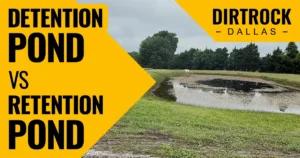
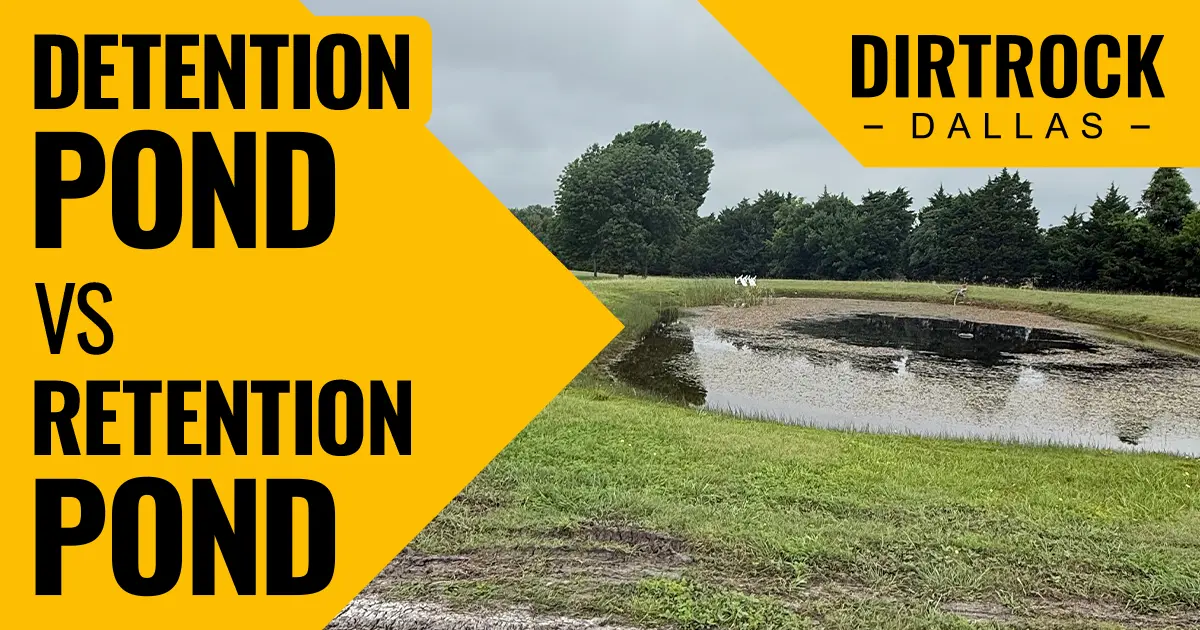
A detention pond holds stormwater temporarily and drains dry, usually in 24 to 72 hours. A retention pond holds a permanent pool of water year-round. Both manage runoff. Only one gives you standing water. On civil plans and city drainage codes, you’ll also see these called detention basins and retention basins: same structures, different paperwork.
What Is a Detention Pond?
A detention pond, or detention basin, is a graded basin built to catch stormwater runoff and release it slowly through a controlled outlet. It fills during a storm and drains down after. Most sit dry the rest of the time: exposed dirt or grass on the bottom, waiting on the next rain.
DFW cities and counties require detention on most new commercial development and many new subdivisions. The basin gets sized to hold the extra runoff that pavement and rooftops create, then release it at the rate the land handled before it was developed. The same water still ends up downstream. The basin just spreads out the timing so the storm drain can handle it.
For the full design specs (storage volume, outlet structure, side slopes, spillway), see our detention pond guide.
What Is a Retention Pond?
A retention pond, or retention basin, holds a permanent pool of water. Runoff comes in, mixes with the standing water, and the pond releases the excess out the top once it’s full. Between storms, the water stays.
That permanent pool is what lets a retention pond double as a landscape feature, a fishing pond, or a wildlife draw, something a detention pond, empty most of the year, can’t do. Retention ponds also work as water quality basins: sediment and pollutants in the runoff get time to settle out in the standing water before it discharges. That’s part of why cities favor them for larger developments near creeks and waterways.
Detention Pond vs Retention Pond: The Key Differences
| Detention Pond | Retention Pond | |
|---|---|---|
| Water level | Dry between storms, drains in 24 to 72 hours | Permanent pool, holds water year-round |
| Primary job | Slow the release of stormwater | Slow the release, plus filter sediment and pollutants |
| Appearance | Grass or dirt basin most of the year | Looks like a small lake or pond |
| Common use | Commercial sites, subdivisions, drainage compliance | Farm ponds, fishing ponds, landscape and wildlife features |
| Maintenance | Mow the slopes, clear the outlet, inspect after storms | Manage water quality, algae, and vegetation, plus the outlet |
| Typical depth (DIRTROCK builds) | Set by the design storm, not a fixed depth | Averages 10 to 12 feet on our builds |
Which One Does Your Property Need?
When the Drainage Code Decides for You
If you’re developing commercial property or a subdivision in DFW, your civil engineer and the city’s drainage ordinance make this call, not you. Most municipal codes require detention. Some, especially near sensitive waterways, call for a retention component too, to handle water quality. Build to what the sealed civil plan specifies.
When You Want a Working Pond or a Permanent Water Feature
If you own 5 acres or more in North Texas and want a fishing pond, a stock pond for livestock, or a pond that adds value to the property, you want a retention pond. Detention ponds are built to be empty. A dry basin doesn’t hold fish, water cattle, or do anything for curb appeal.
Commercial Sites vs. Rural Acreage
Commercial developers building in DFW typically need detention, sometimes both. Rural landowners typically want retention. If you’re not sure which side of that line your project falls on, that’s a conversation for your civil engineer, for code compliance, and your excavation contractor, for what the ground and the budget will support.
Cost and Construction: How They Compare
The dig is similar for both: strip topsoil, cut to grade, build and compact the embankment, set the outlet structure, stabilize the slopes. A retention pond adds one more variable: the pond has to hold water permanently, so the soil and the liner question carry more weight. Much of North Texas sits on blackland clay, which compacts into a natural seal and often means no liner is needed. Sandy or rocky ground can change that math fast.
Maintenance: What Each One Needs Long-Term
Both need upkeep. They don’t need the same upkeep.
Detention pond maintenance
It comes down to keeping the outlet clear. A grocery bag, a beaver dam, or a season of leaves can turn a detention pond into an accidental retention pond. Inspect twice a year and after major storms, mow the slopes, and clear the outlet on every visit.
Retention pond maintenance
It is about managing what’s living in the water. Algae, aquatic weeds, and sediment buildup are the recurring issues. Aeration and periodic dredging keep a retention pond from silting in and losing its ability to filter what comes through it.
Building the Right Pond for Your Property
Cost usually isn’t what separates these two. Function is. Figure out what the pond has to do (meet a drainage code, hold fish, water cattle, or add a feature to the land) and the right type gets obvious fast.
DIRTROCK DALLAS builds and maintains both detention and retention ponds across DFW and East Texas: excavation, dam construction, outlet structures, and grading, all held to the DIRTROCK Standard. Veteran-owned, family-owned, with a fleet sized for a quarter-acre backyard basin or a commercial detention pond tied into a full site development.
Tell us what you want the pond to do and where the land is. We’ll tell you which one it needs to be and what it takes to build it.
Get a quote on your pond project
Frequently Asked Questions
Is a detention pond the same as a retention pond?
No. A detention pond drains dry between storms, usually in 24 to 72 hours. A retention pond holds a permanent pool of water year-round. Both manage stormwater, but only a retention pond holds standing water long-term.
Can a detention pond be converted into a retention pond?
Sometimes, if the soil holds water and the outlet gets regraded to keep a permanent pool instead of draining it. That’s a design change, not a simple retrofit. Get an engineer to confirm the site can support it before any dirt moves.
Which is cheaper to build, a detention pond or a retention pond?
The excavation work runs similar for both. A retention pond can add cost if the soil needs a liner to hold water permanently.