





A pond is an earthwork project first
Digging a pond is not landscaping. It is excavation, dam construction, and soil compaction, and each of those steps decides whether the finished pond holds water for decades or bleeds it back into the ground by August.
DIRTROCK DALLAS is a pond contractor based in Terrell, TX, serving landowners, farmers, and developers across Dallas-Fort Worth and East Texas. The fleet we run on commercial earthwork is the same fleet we bring to your pasture: excavators, dozers, and hauling trucks, all in-house.
Our pond work starts around a half acre of water and scales up from there. If you own acreage and want a pond built to outlast you, this is the crew for it.
Ponds we dig and build
Pond construction covers a lot more than a fishing hole behind the house. We dig and build:
- Fishing ponds shaped with the depth and contours fish need
- Livestock and farm ponds sized to your herd’s water demands
- Drainage ponds that put standing water where it belongs
- Retention ponds that hold water year-round
- Detention ponds and basins for commercial stormwater control
- Stock tanks for rural acreage
The scope stays in-house start to finish, whether it’s a residential project on rural land or a commercial development with an engineered detention basin on the civil plans.
Pond cleanout and dredging
Every pond silts in eventually. Runoff carries sediment year after year, and a pond dug to 12 feet can lose half its depth to muck before the weeds and the summer fish kills give it away.
Our pond cleanout work removes the silt, sludge, and weed growth, reshapes the basin, and repairs the dam where it needs it. Spoil gets spread on your property or loaded and hauled off-site, whichever the plan calls for.
Sometimes a cleanout is the wrong call. If the dam has failed or the original dig never sealed, we’ll tell you straight and quote the rebuild instead.
How a pond project works
Every pond we build follows the same sequence. Skip a step and you find out two winters later, usually after the fish are in.
Site evaluation and soil check
A pond holds water because of what’s under it. We walk the site and check the soil’s clay content, since compacted clay is what seals a basin, and much of North Texas sits on clay that compacts well. Where the soil runs sandy, the plan includes a clay liner before the first bucket moves.
Design, dam, and spillway
Depth, contours, dam placement, and overflow get planned before any digging. The ponds we build average 10 to 12 feet deep, and dam and spillway sizing follows the same engineering criteria laid out in the USDA’s pond design handbook.
Excavation and compaction
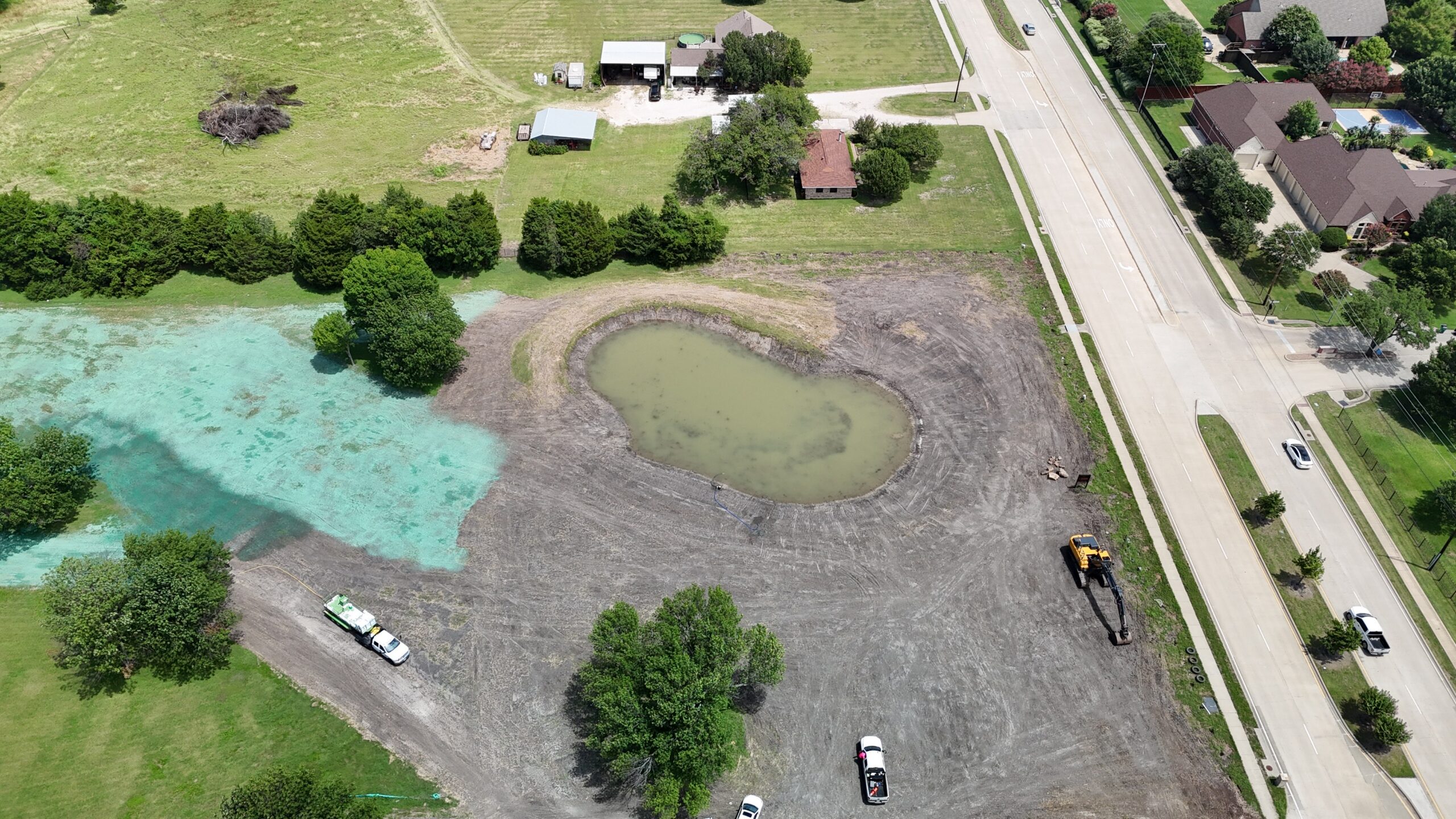
This is the phase that decides whether the pond leaks. We call Texas 811 to mark underground utilities before equipment moves, then cut the basin and compact the dam core in lifts. Our excavation crews run the same cut and fill discipline here that commercial site work demands.
Finish grading and cleanup
We shape the banks and set the surrounding grade so runoff feeds the pond instead of eroding it. Finish grading and site preparation stay in-house, so the site is done when we leave, not waiting on another contractor.
Ready to put water on your land?
Why ponds fail without the right contractor
Most failed ponds fail the same few ways. Poor compaction leaks. Sandy soil without a liner leaks. An undersized spillway washes out the dam in the first real storm.
Fixing a failed pond costs more than building it right, because the fix starts with draining the water and excavating someone else’s work. Texas A&M AgriLife’s pond construction guidance makes the same point we make on every walkthrough: the site and the soil decide the outcome before the first pass of the dozer.
We build to plan, compact to spec, and hold every dam to the DIRTROCK Standard.